

 How many children per teacher do you have?
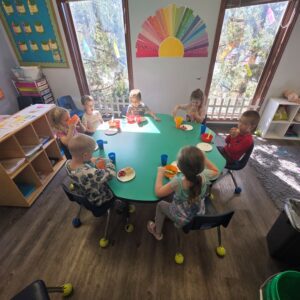 How many children per teacher do you have?
This is a common question we are asked while people are making a decision about where to have their child spend their days. It’s a great one! Wisconsin, as well as other states, do have minimum ratio requirements broken down by age group that define how many children are permitted in a class with one teacher.
As of today, September 29, 2026, Wisconsin ratios are as follows:
| Age Group | Teacher-to-Child Ratio | Maximum Group Size |
| 0 – 1.5 years (Infants & Young Toddlers) | 1 teacher to 4 children (1:4) | 8 |
| 1.5 – 2.5 years (Toddlers) | 1 teacher to 7 children (1:7) | 14 |
| 2.5 – 3 years | 1 teacher to 8 children (1:8) | 16 |
| 3 – 4 years (Preschool) | 1 teacher to 10 children (1:10) | 20 |
| 4 – 5 years (Pre-K) | 1 teacher to 13 children (1:13) | 26 |
| 5+ years | 1 teacher to 18 children (1:18) | 36 |
Always be sure to check with the Department of Children and Families for any updates to these numbers. Note: there are additional rules like the maximum age group if there are more than one teacher.
Grouping Children by Calculated Age
Is it best to group children under 5 years old (or any age I suppose) based on when they were born? Consider that many children develop at different ages, especially when you consider timeframes of months! Matt and I believe strongly in our belief,
“Let them be little; and then watch them grow.”
One child might start talking understandable words, “mama” “dada” but not be as mobile as some friends at the same ages. Trust me when I say this, it’s a whole lot easier on childcare centers to arrange their rooms by calculated age. There isn’t a question of when children are moving and opening up a spot for the next person! But… is it truly best for the child?
We have been asked by families that visit and even our team members, “how many kids in each daycare class?” and in some rooms, it is that easy. But in at least half of our six classrooms, it all depends on what ages of children are in the class.
There’s an App for That
Ok, I wish there was an easy app to figure out how many children of mixed calculated ages could be with one teacher, but… an easy way did not exist, so I created my own spreadsheet with some simple math so we can always be assured we are not only within our own standards of care, but always also meeting the WI State minimums. The state worksheet for calculating the group numbers can be found here. Pictured below is my very simple Google Sheets spreadsheet that I made. By entering the number of children in each age range into column B, the sheet calculates and returns the group numeric weight in cell D:8. All you have to know is that anything over 1.04 is over the limit for one teacher.
The state did end up creating a ratio calculator that can also be used.
Why Don’t More Childcare Centers do Mixed Ages?
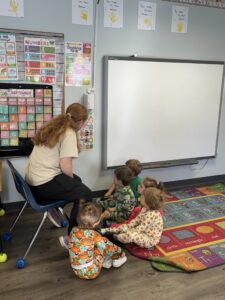 Why Don’t More Childcare Centers do Mixed Ages?
Many early learning centers group by calculated age. It’s easier for the system by far!
-
It turns transitions into an assembly line: Traditional centers move children from room to room based solely on a calendar date—like turning 6 or 12 months—rather than emotional readiness or developmental stage. It makes waitlist forecasting simple for the office, but it disrupts consistency for the child.
-
It optimizes adult schedules over child stability: Grouping strictly by age makes teacher ratios predictable and shift planning easy. But care shouldn’t be built around administrative convenience; it should be built around what is natural and supportive for children.
-
It siloes children into artificial age bubbles: In the real world—and at home—learning doesn’t happen in isolated age groups. Strictly separating ages deprives younger kids of older role models and deprives older kids of chances to practice empathy and leadership.
At Just Like GRAMMY and POPPOP’s, we don’t look for the easy way; we look for the best way for the children. By keeping mixed-age environments and honoring family bonds, we create a warm, home-like setting where siblings can thrive together and every child learns at their own natural pace.
I’d love to open up further discussion and invite you to schedule a Meet & Greet Tour with us!
Grammy Kim
